
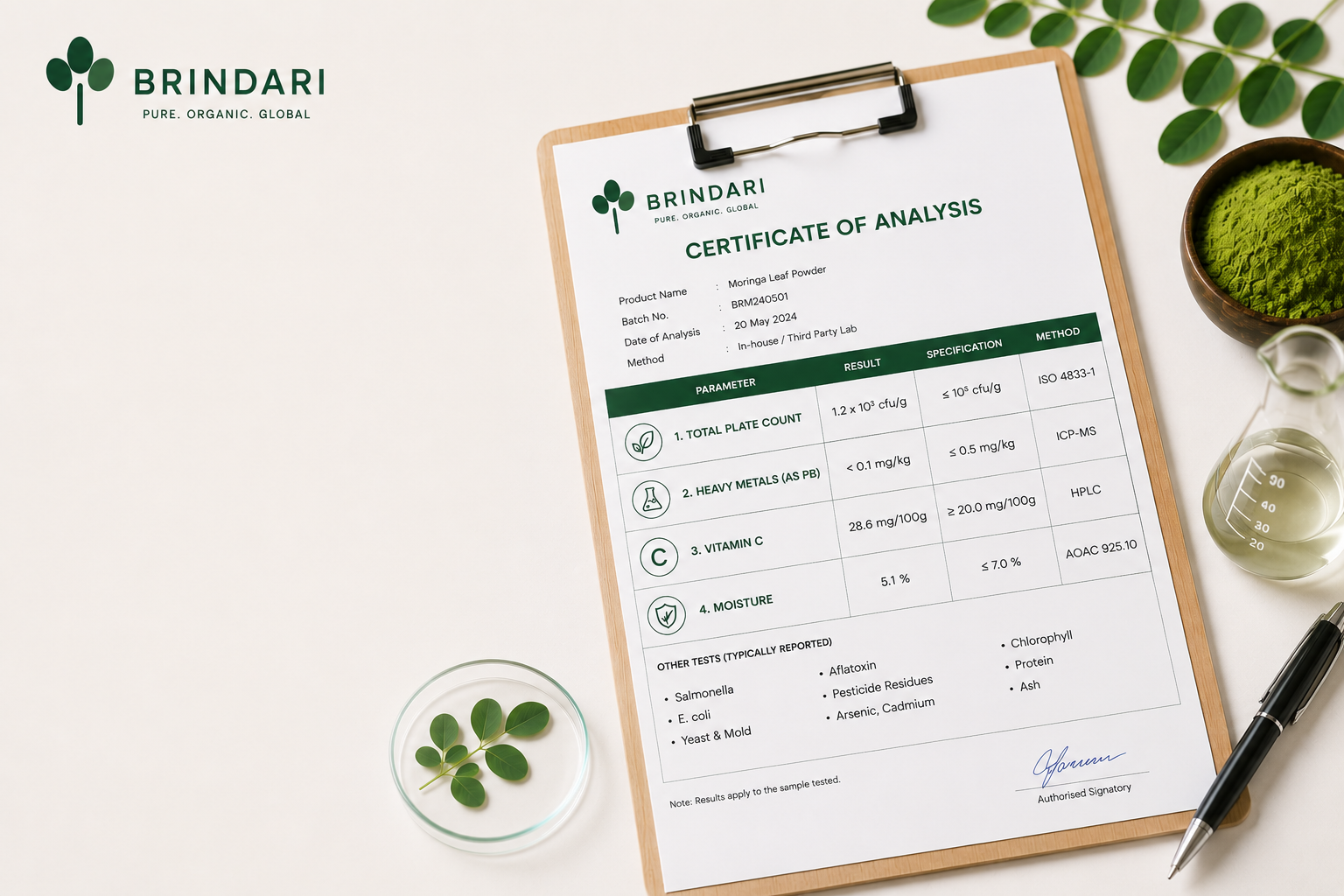
Reading a moringa COA: the four numbers that actually matter.
Most COAs run to two pages of test results. For 90% of buyers, just four lines tell you everything. What to look for first — and what to politely ignore.

Briefs on sourcing, quality, packaging, and shipping for buyers, formulators, and brand teams. Written to help you specify, evaluate, and sell better moringa — not to push a product.
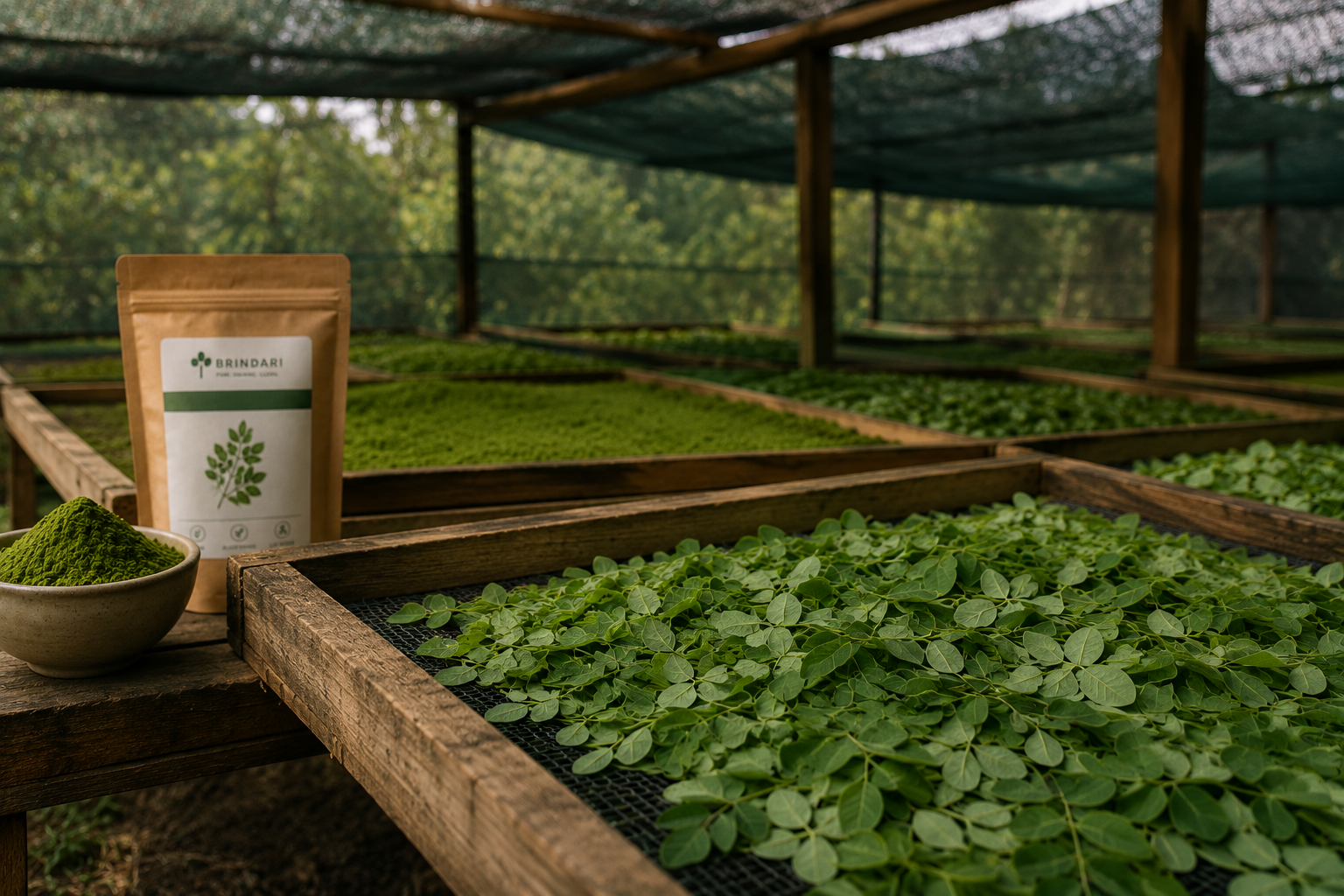
Sun-dried moringa loses up to 70% of its vitamin C and most of its chlorophyll within hours. Shade drying takes 36–48 hours longer, but the powder lands greener, brighter, and assays measurably better. A look at the industry trade-off, with the typical numbers behind it.
Read the field noteMost COAs run to two pages of test results. For 90% of buyers, just four lines tell you everything. What to look for first — and what to politely ignore.

The cheapest unit price isn't always the cheapest landed cost. An illustrative quote walked through line by line, so you can see where the costs really sit.
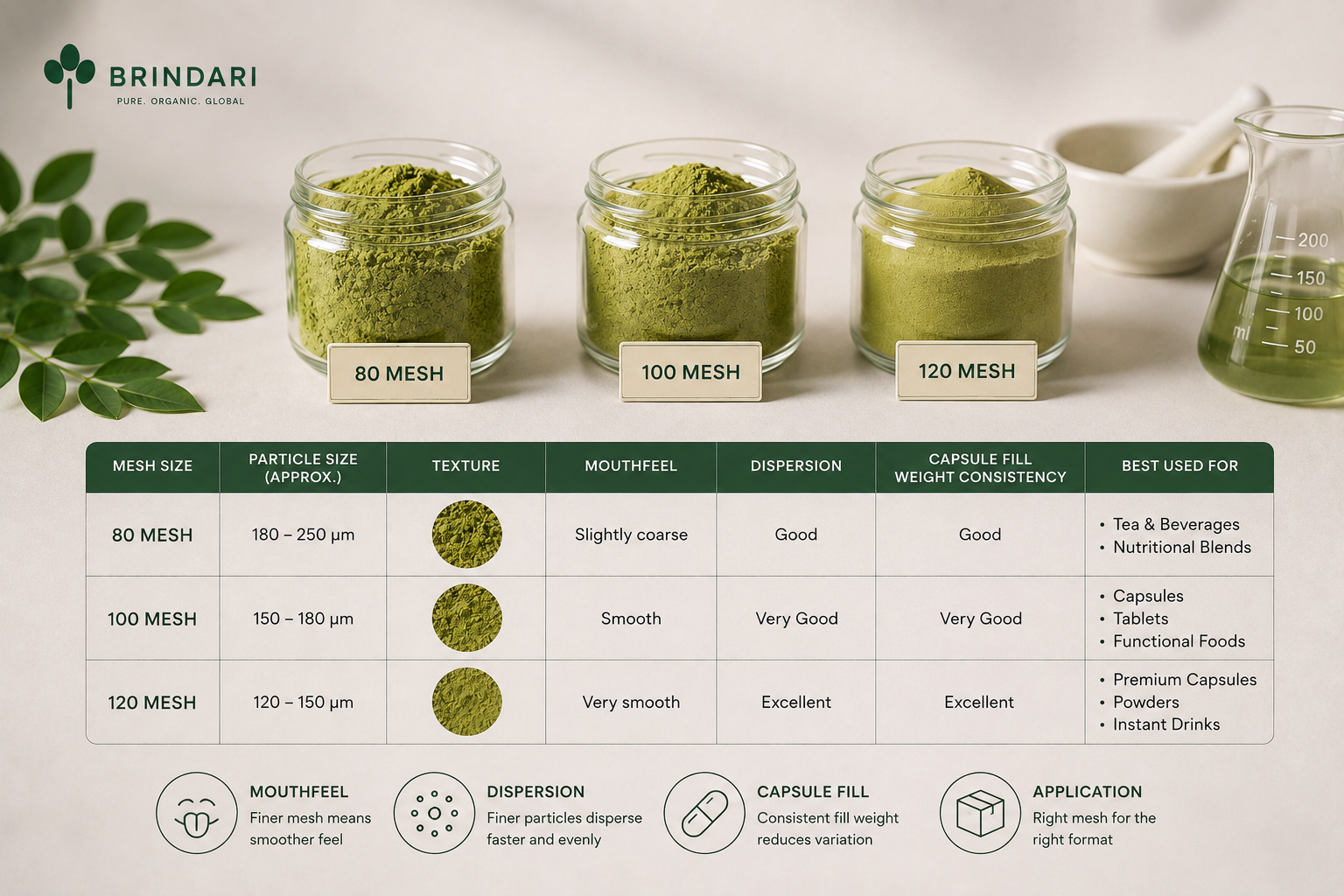
Mesh size affects mouthfeel, dispersion, and capsule fill weight. A breakdown of each grade and which formats use which mesh.
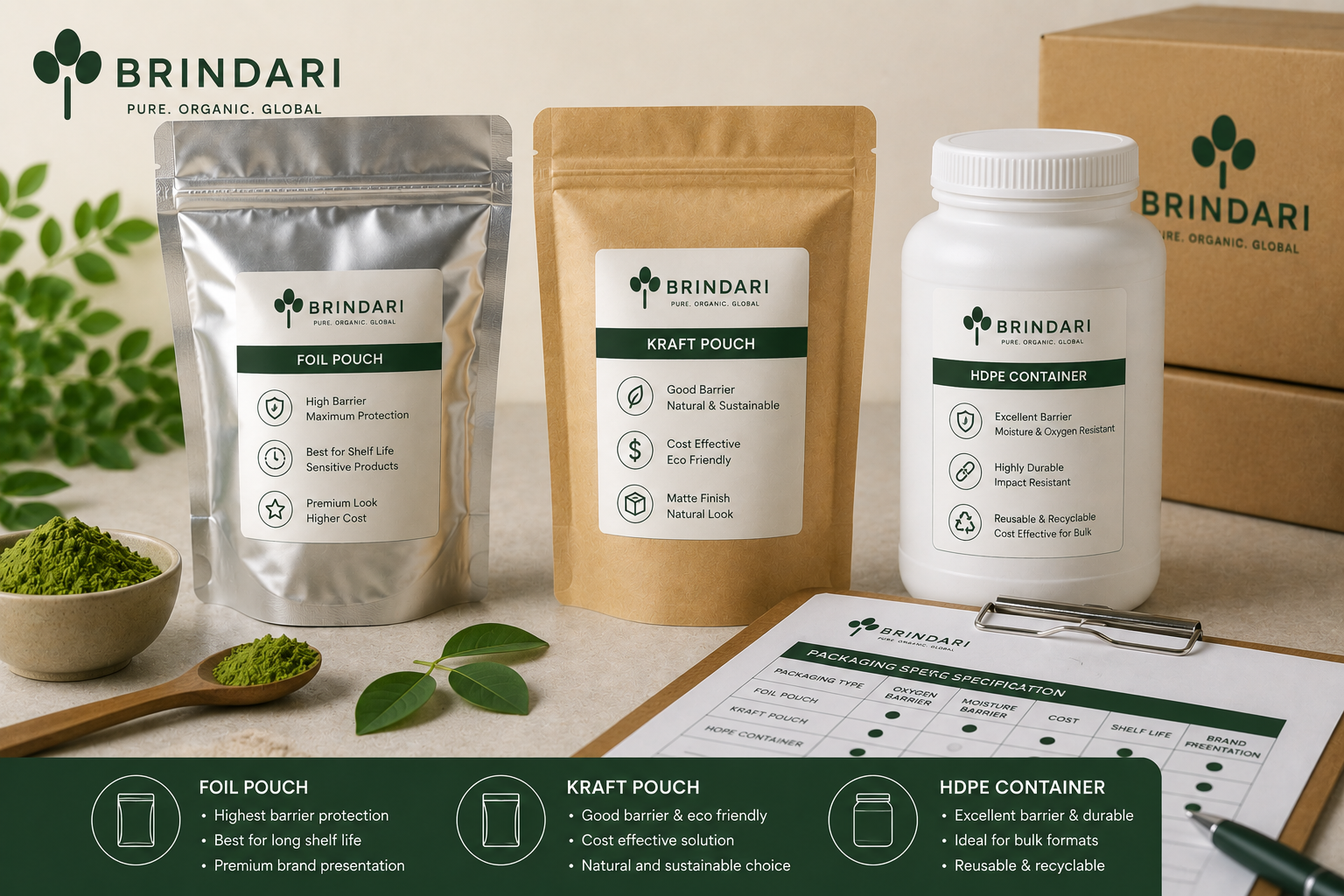
Packaging affects shelf life more than people realise. A short guide to the trade-offs between cost, oxygen-barrier performance, and brand presentation.
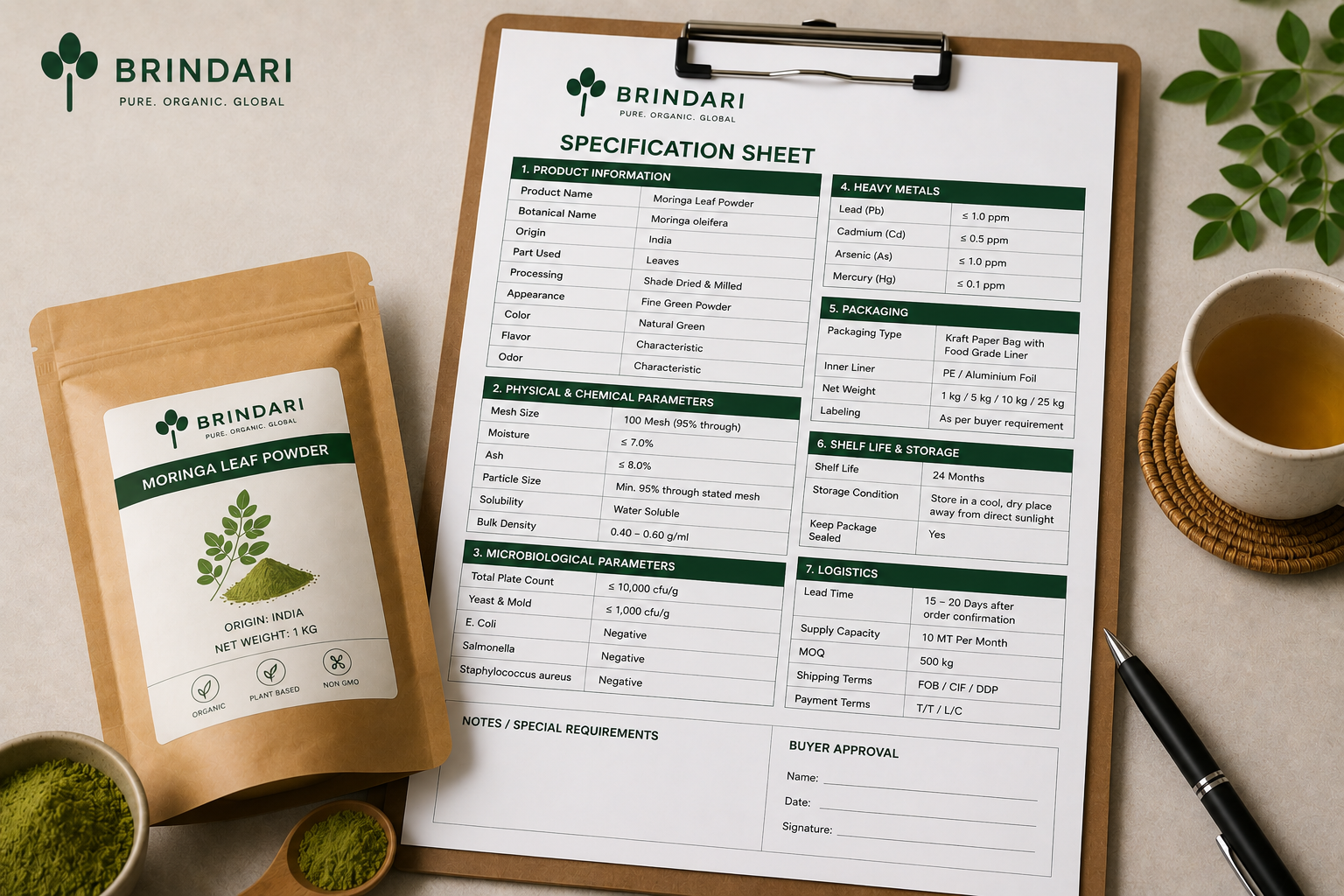
A spec template the industry wishes more buyers used. Mesh, moisture, microbial, packaging, lead time — covered in two pages, no ambiguity.
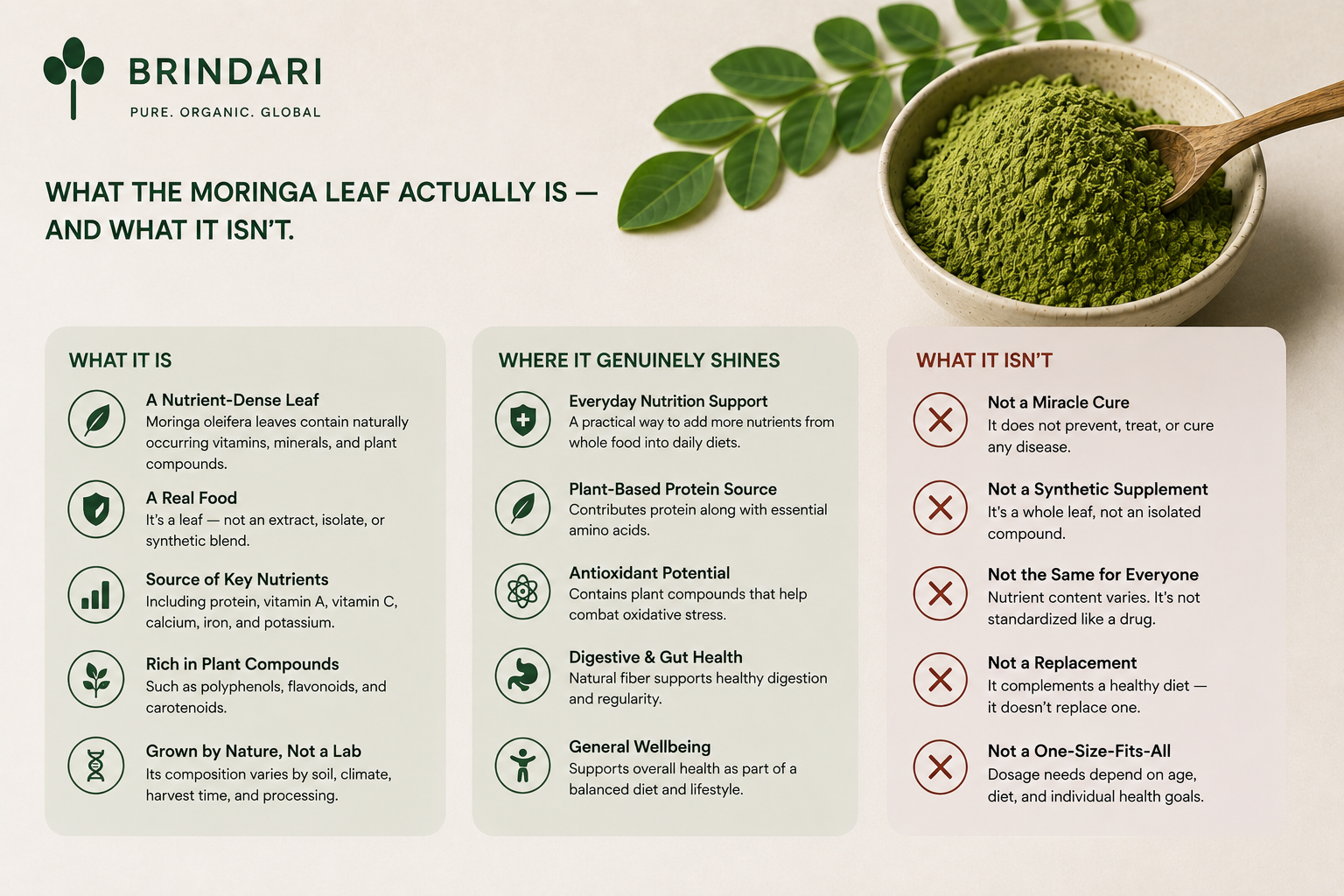
The honest nutrition picture, with the marketing scrubbed off. Where moringa genuinely shines, where the claims overreach, and how to talk about it on a label.
We answer every email personally. If you've got a spec, a question, or just want to understand the supply chain better, write to us.